Saturday, 13 June 2015

If I can be whatever gender I want to say I am, why can’t I be whatever race I want to be? This could come in handy for my kids to nab some scholarships.I say go for it. In fact, I think a good start would be for every white male college student to change his registration to black female, and then threaten to litigate if their university won’t accept it. Ask them, ‘‘If I’m not black enough for you, what is?’’ Press for explicit definitions: Make ’em pick and choose, and then force them to defend their choices. (If race and gender are ‘‘social constructs,’’ how can you judge?)
(Oh, and consider a simultaneous transgendering from gay male to gay female for additional amusement (and prizes!).)
All would take is a bit of that Evil Conservative Money to hire some of those newly-minted (and not-so-newly-) unemployed JDs, and they’ll be tied up in knots until kingdom come!
Anybody want to start a foundation?
LATER (150816!):
Bookworm offers a how-to:
The coming perfect storm on American college campusesWhere’s the popcorn?
...the accused ex-boyfriend claims that the charge against him cannot possibly be true... [because] during the time he was dating his accuser, his gender identity was feminine. Not only was his gender identity feminine, it was also lesbian — and to the extent his appearance on campus was externally masculine, he behaved that way because he had discovered that he had much greater sexual success as a lesbian (with sexual success defined as encounters with other women) when those same women believed he was a man. He knew, however, at all relevant times, that he was a lesbian having sex with the woman now hiding behind a screen and accusing him of the heteronormative crime of rape.
Not only does the accused ex-lesbian boyfriend deny the charges against him, he counterattacks. ...The so-called ‘‘victim,’’ has caused him deep emotional distress. She is therefore guilty of microaggressions directed at (1) lesbians, (2) women, and (3) gender fluid individuals. Moreover, the administrative tribunal itself is a triggering factor that has caused him to relive... the horrors of a childhood with religious conservative parents who insisted that men are men, women are women, and that marriage can be only between one man and one woman.
Because of these appalling microaggressions and triggering events, the manifestly innocent ex-lesbian boyfriend... plans to... file a suit against the University and his accuser alleging discrimination, sexual harassment, gender bias, emotional distress, and all other claims necessary to compensate him for the terrible emotional wrongs committed against him.
Posted by: Old Grouch in
Rants
at
21:31:26 GMT
| Comments (9)
| Add Comment
Post contains 448 words, total size 6 kb.
Saturday, 13 September 2014
The Canadian Broadcasting Company puts the word out:
American shakedown: Police won't charge you, but they'll grab your moneyIt’s supposedly about ‘‘drugs’’. Well, that or maybe it’s ‘‘national security’’. Whatever...
U.S. police are operating a co-ordinated scheme to seize as much of the public’s cash as they can
...
There’s a shakedown going on in the U.S., and the perps are in uniform.
Across America, law enforcement officers —from federal agents to state troopers right down to sheriffs in one-street backwaters —are operating a vast, co-ordinated scheme to grab as much of the public’s cash as they can; ‘‘hand over fist,’’ to use the words of one police trainer...
The Washington Post this week reported that in the past 13 years, there have been 61,998 cash seizures on roadways and elsewhere without use of search warrants.
The total haul: $2.5 billion...
...
So, for any law-abiding Canadian thinking about an American road trip, here’s some non-official advice:
Avoid long chats if you’re pulled over. Answer questions politely and concisely, then persistently ask if you are free to go.
...
Don’t be too talkative. Don’t be too quiet. Try not to wear expensive designer clothes. Don’t have tinted windows.
And for heaven’s sake, don’t consent to a search if you are carrying a big roll of legitimate cash.
As the Canadian government notes, there is no law against carrying it here or any legal limit on how much you can carry. But if you’re on an American roadway with a full wallet, in the eyes of thousands of cash-hungry cops, you’re a rolling ATM.
Say, do you suppose any of our liberty-loving politicians in Washington might want to take a look into this?
Ha-ha-ha-ha-ha-ha-ha-ha!
(Via: Ace’s Overnight Thread)
Posted by: Old Grouch in
Rants
at
17:56:26 GMT
| No Comments
| Add Comment
Post contains 298 words, total size 3 kb.
Monday, 21 April 2014
On March 24, 2014 at the Cross Examination Debate Association (CEDA) Championships at Indiana University.., the resolution asked whether the U.S. president’s war powers should be restricted. Rather than address the resolution straight on, [the] teams of African-Americans attacked its premise. The more pressing issue, they argued, is how the U.S. government is at war with poor black communities.IOW, we’re not going to talk about what we agreed to talk about, we’re going to talk about what we want to talk about. Because: Racism!
In the final round, [Ameena] Ruffin and [Korey] Johnson squared off against Rashid Campbell and George Lee from the University of Oklahoma, two highly accomplished African-American debaters with distinctive dreadlocks and dashikis. Over four hours, the two teams engaged in a heated discussion of concepts like ‘‘nigga authenticity’’ and performed hip-hop and spoken-word poetry in the traditional timed format. At one point during Lee’s rebuttal, the clock ran out but he refused to yield the floor. ‘‘Fuck the time!’’ he yelled.Shut Up!, he explained. Demonstrating (yet again!) that there’s nothing new under the sun:
They sat back and waited for you to come rolling in with your certified angry militants, your guaranteed frustrated ghetto youth, looking like a bunch of wild men. Then you had your test confrontation. If you were outrageous enough, if you could shake up the bureaucrats so bad that their eyes froze into iceballs and their mouths twisted up into smiles of sheer physical panic, into shit-eating grins, so to speak--then they knew you were the real goods. They knew you were the right studs to give the poverty grants and community organizing jobs to. Otherwise they wouldn’t know... - Tom Wolfe, Mau-Mauing the Flack Catchers, 1970(!) (review) (quote found here)...and that there’s (at least) one born every minute:
...Ruffin and ... Johnson [thus] became the first African-American women to win a national college debate tournament...Of course they did.
Demonstrating that: In any confrontation between white liberals and black grievance hustlers, the liberals will surrender. Count on it.
Elsewhere:
Vox Day: The End of Debate
Ed Driscoll (who misses the point): Punks, Meet the Godfather
Related:
William Jacobson: ‘‘Shut Up culture’’ takes on dissent over campus ‘‘rape culture’’
Sarah Hoyt: Check Your Victimhood
Bill Quick: I Can’t Even Keep Track Anymore...
Vox Day: An appeal to reinstall Firefox
Pick A Card
Posted by: Old Grouch in
Rants
at
18:07:29 GMT
| No Comments
| Add Comment
Post contains 411 words, total size 7 kb.
Tuesday, 17 December 2013
Tech execs to confront Obama on spying(S’cuse me... AT&T?: Ha-ha-ha-ha-ha-ha-ha-ha-ha!)
Executives from the nation’s biggest technology companies will meet with President Obama on Tuesday to discuss the revelations about National Security Agency surveillance.
The meeting will include Apple CEO Tim Cook, Yahoo CEO Marissa Mayer, Netflix CEO Reed Hastings, Twitter CEO Dick Costolo, Facebook COO Sheryl Sandberg, Google Chairman Eric Schmidt, Comcast CEO Brian Roberts and AT&T
... and AT&T CEO Randall Stephenson.Dear Techies:
Several Silicon Valley giants including Google, Facebook and Yahoo are lobbying Congress to restrict the NSA’s powers and make the agency more transparent. They warn that the surveillance is undermining trust in their services and hurting both their bottom lines and the U.S. economy...
And we also know that the government will force you to lie to us about secret surveillance... and then to lie about lying about it.
So you’ll have a meeting, the government will lie to you, and you will turn around and lie to the us.
Trouble is, we now know better. (And Snowden is still out there.)
And if Americans can’t believe you, why should Johnny Foreigner?
So guess what: You fucked up, you trusted them.
(But maybe you can wrangle a few more H1-Bs for all your trouble.)
UPDATE(131218 11:55): Whatta buncha maroons!
The Daily Mail:
• The White House telegraphed in advance that the president wanted to talk up his efforts to fix healthcare.gov, but no one in the room was interested
• Tech executives gathered in the Roosevelt Room to discuss the NSA’s overreach in seizing their digital records
• A federal judge ruled Monday that the practice violates the U.S. Constitution’s guarantees against unreasonable searches
Related:
Posted by: Old Grouch in
Rants
at
19:44:53 GMT
| No Comments
| Add Comment
Post contains 386 words, total size 8 kb.
Friday, 15 November 2013
Eugene Kontrovich:
...Here, Obama is apparently suspending the enforcement of a law for a year – simply to head off actual legislation not to his liking...
[But]... the fix goes far beyond ‘‘non-enforcement’’ because it requires insurers to certain new action to enjoy the delay. This is thus not simply a delay, but a new law.
The ‘‘fix’’ amounts to new legislation – but enacted without Congress. The President has no constitutional authority to rewrite statutes, especially in ways that impose new obligations on people, and that is what the fix seems to entail.
Yeah, so who’s going to do anything about it...?
The RINOs? Gotta help bail out their buddies across the aisle.
The conservatives? ‘‘R-a-a-a-a-cist!’’ Also ‘‘wreckers and looters.’’
The press? Not a chance; he’s a Democrat:
On NPR this morning, they were debating whether this change was incredible or merely really good. The subject of legality never came up.Oh, and George Bush was Really, Really Bad.
The Supreme Court? Justice Roberts? Bwa-ha-ha-ha-ha-ha!
The Justice Department? Eric Holder? Ho-ho-ho-ho-ho-ho-ho-ho!
Mr. Average Citizen? ‘‘Shut up, there’s no standing for you!’’ (see Supreme Court, above).
The insurance industry? ‘‘Nice business you got there. Wouldn’t want it to be another AIG, would you?’’
The states? ‘‘Hey, nobody here but us chickens!’’
The voters? ‘‘We got our Obamaphones!’’
Welcome to Chicago-style government by decree.
And isn’t it a tragedy that, in our entire rotten government-political establishment, there’s not one honest man?
Posted by: Old Grouch in
Rants
at
18:53:23 GMT
| No Comments
| Add Comment
Post contains 253 words, total size 5 kb.
Thursday, 07 November 2013
Francis Fukuyama finds our federal bureaucracy wanting:
I find it amazing how far much of the US federal bureaucracy has fallen from the standard of a professional, impersonal, merit-based Weberian organization since the first efforts to do this were made under the 1883 Pendleton Act. For example, in recent years fully half of all new entrants into the federal civil service have been veterans, and of these, a large number are disabled veterans. There is nothing wrong with hiring disabled veterans, but this Congressionally-mandated veterans preference was not designed with the aim of producing the highest possible quality government. It is akin to the mandates imposed on federal procurement for small-, women-owned, or minority business contracting...(We interrupt this quotation to remove two sentences. Reason why, below.
Meanwhile, continuing...)
Recruitment and promotion tend to value experience over capacity, and therefore reinforce a status-quo bias among federal employees. What we end up with is a screwed-up set of incentives for federal workers that does not reward innovation, risk-taking, or high levels of qualification.Problem stated. And now, his solution, in those two sentences:
What the contemporary civil service fails to do is to attract smart, highly qualified young people out of elite universities in the manner of the classic French, German, or British services. In fact, the government is very good at putting a large number of obstacles in front of any ambitious young person who might want to sign up, like voluminous disclosure rules in the current employment regulations.So: One of our public intellectuals wants to fix failure in government by replacing the bureaucracy’s protected-class incompetents with ‘‘elite university’’ mandarins. (You know, like in France!)
How... unsurprising.
Via: Glenn Reynolds, who notes:
...The fact [is] that the civil service has been colonized by a single political party, and that career officials who are supposed to be nonpartisan have been acting as partisan political operatives... I don’t think that Fukuyama’s proposed reforms would do anything about this problem.Indeed. More likely exacerbate it.
Posted by: Old Grouch in
Rants
at
18:04:52 GMT
| Comments (1)
| Add Comment
Post contains 330 words, total size 3 kb.
Monday, 15 July 2013
CNN:
Urban Outfitters halts prescription-themed productsYou know, products like this coffee mug:
 |
Labeled with ‘‘Dr. Harold Feelgood’s’’ prescription to ‘‘Joe Espresso’’ for one mug of coffee... ‘‘repeat until awake and alert.’’ |
That’s after UO got a threatening letter
...sent by the attorneys general of 22 states and Guam that also urged Urban Outfitters to cease sales of glasses, coasters, mugs, drink holders and other prescription-related products.Demonstrating that the ‘‘attorneys general of 22 states and Guam’’ have way too much time on their hands and are obviously overdue for significant budget cuts.
Oh, and somebody named Marsha Ford, the president of something called the American Association of Poison Control Centers, also sent a letter; which gets today’s Michael Bloomberg award...
Products such as these minimize the dangers of medicine abuse and misuse and are very dangerous.F’in busybodies...
And for caving, Urban Outfitters == a bunch of wimps.
Via: Ace
-----
Posted by: Old Grouch in
Rants
at
19:05:35 GMT
| No Comments
| Add Comment
Post contains 164 words, total size 4 kb.
Monday, 11 February 2013
National Public Radio ombudsman Edward Schumacher-Matos sets up the situation:
On Saturday, Jan. 19, ESPN’s Howard Bryant appeared on NPR's Weekend Edition with Scott Simon to talk about sports. The broadcast was taped live. Simon asked about Lance Armstrong’s famous interview with Oprah Winfrey, and Bryant referred back to a tweet he read:Bryant’s remark is yet another example of the kultursmog that pervades the MSM. He calls it ‘‘very funny’’ (it’s not, it’s lame). Nor does it add anything to the discussion about Lance Armstrong. What it does is borrow somebody else’s snark[1] to signal that Bryant has proper, PC-approved feelings and that he stands firmly against the target of today’s ten-minute hate.[2]I mean, I think the big problem that I had with listening to Lance over the last couple of days was how controlled – how much he was trying to control this confession. That someone had put out a very funny tweet in my timeline that other day that said, ‘‘With this much remorse he could be the next spokesperson for the NRA.’’ I mean, it was really that controlling. And I’m listening to this, and I’m thinking: He’s not sorry at all about this.Simon didn’t respond to the NRA comment, but kept the conversation focused on sports.
Listener Charles Brown... [did]. Before the audio or transcript had been posted online, Brown wrote on the show’s site, ‘‘I am looking forward to seeing the transcript of this segment, featuring Howard Bryant’s tone-deaf comparison between the remorse, or lack thereof, on the part of Lance Armstrong, and ‘the NRA.’ ’’
The transcript Brown eagerly awaited eventually arrived, but the reference to the gun association wasn’t there – either in the audio file or written transcript. The response by Bryant now existed in both as the following:I mean, I think the big problem that I had with listening to Lance over the last couple of days was how controlled - how much he was trying to control this confession. And I’m listening to this, and I’m thinking: He’s not sorry at all about this.Brown contacted our office suspicious of a conspiracy. ‘‘There is no explanation for the post-broadcast edit. Is this instance a representative one, for NPR editing and posting policy(ies)?’’
MSM-ers (and progressive leftists, but I repeat myself) do this sort of thing all the time, often without even thinking about it. For them, it’s as habitual (and content-free) as ‘‘how do you do?’’ The important thing to remember is that, when it comes to such remarks, they eventually pay no attention to what’s being said: For them it’s just meaningless noise.
Back in the day, had I been prepping the segment for broadcast, I would have grabbed my splicing block and grease pencil and made the exact excision that the NPR editors did (on the grounds of wasted time, if no other). But that would have been before the item aired. What happened on the 18th was different: Apparently the initial feed of the Simon-Bryant interview aired live, or at least ‘‘live-meaning-unedited.’’ But then someone with second thoughts clipped the sentence for later transmissions.[3]
Now NPR has a policy about changes to stuff once it has been broadcast. NPRs Stuart Seidel:
Only the last feed of each show is archived and transcribed. As a result, there are times when a listener may have heard something on a first or second feed of a show and then find that the transcript does not reflect what was aired on an early feed....but (back to the ombudsman) in this case...
We correct errors as quickly as possible when we learn of them. Significant errors are noted on the air in ensuing feeds of a show. When appropriate, corrections posted online note whether the error occurred in an early or final feed of a show.
The edit in the Bryant segment was not seen as the correction of a mistake, and therefore no note was added to the transcript online that a change had been made.So here we have... well, something.
My take is that the NPR people can’t (or won’t) see there is a problem, because they can’t see the problem. Ombudsman, again:
...The editors were still right to excise [Bryant’s] unsupported, unexplored, non-sports comment, as clever as it might have been.Agreed. But what Bryant said is not just ‘‘unsupported, unexplored, [and] non-sports.’’ He also took a political position, against the National Rifle Association and, by extension, in favor of ‘‘doing something’’ about ‘‘gun violence.’’ To some folks, that might be important. Maybe even controversial.
But the NPR-ites don’t notice, because (to them) all that Bryant did in the excised segment was mouth the usual leftist platitudes. Again: As meaningless and content-free as ‘‘how do you do?.’’
That makes the edited and un-edited quotes identical. And if they’re identical, then substituting one for the other is no correction, so what’s the problem?
Meanwhile, we rubes out here in the hinterland discover that the NRA snark has mysteriously disappeared from the ‘‘official transcript’’ on the web (and, as it turns out, the ‘‘late feeds to flyover country’’ as well), and see their suspicions of media bias (and duplicity) confirmed. The situation not being improved by Ombudsman Schumacher-Matos characterizing listener Brown’s questions as ‘‘suspicious of a conspiracy,’’ and preemptively labeling others who might share Brown’s concerns as ‘‘conspiracy theorists.’’[4]
I find it simply amazing that an organization that prides itself in its exquisite sensitivities- to race, national origin, economic condition, background, social status, exploitation, victimhood...- can be so absolutely, unbelievably tone-deaf to the concerns of a large portion of its constituency.
One might even suspect it’s intentional.
(Via: Insty)
-----
[2] Impossible to envision: ‘‘With this much remorse he could be the next spokesperson for Hillary Clinton.’’
[3] FTFA:
Weekend Edition... is a two-hour program, but it is fed over seven hours [between 5AM ET and 12 Noon ET] to various stations in different time zones... Over that time, a story is often edited and changed. What visitors to NPR.org find is the final version.[4]
...In the interest of historical accuracy and scholarship, I did wonder whether online transcripts and audio files could have some sort of a routine date-time stamp for when they were broadcast by NPR. ... It wouldn't satisfy conspiracy theorists, and wouldn't tell you whether you actually heard that version on your local radio station at that time.
Posted by: Old Grouch in
Rants
at
01:24:17 GMT
| No Comments
| Add Comment
Post contains 1074 words, total size 11 kb.
Sunday, 08 July 2012
National Review: ...What’s your message to conservatives and tea-party activists who are suspicious of Republican leaders and their commitment to repeal [Obamacare]?Well ya’see, Mitch, it’s because you and your Republican buddies in Congress-especially you guys in the Senate- have established quite a reputation...
McConnell: Boy, I don’t know how they could be suspicious on this issue. Every single Republican in the House and Senate voted against Obamacare. I must have made 125 speeches about it on the floor. If there is any area where I don’t think conservatives of any stripe should be concerned, it would be this one. We’ve been clear and unambiguous about Obamacare from the beginning to the end — all of it.
July 29, 2008: Senate Republicans hold the line- for Two Whole Days
April 2, 2009: The List: Republicans voting for HR.1388
April 6, 2011: Senate holds the President to his own words - NOT
April 15, 2011: Republican defectors = wins for Big Ethanol, Big Labor
June 22, 2011: Lots of talk...
June 29, 2011: "Yet another important reason that Dick Lugar should be sent packing...â€
October 29, 2011: Lamar Smith assaults your liberty (again), Judiciary Republicans go along
April 18, 2012: Senate Republicans choose Pork over Liberty
May 17, 2012: Lugar buys leftie lie...
July 1, 2012: McConnell: Highway deal "like an out-of-body experience.â€
...not to mention that earlier in this same interview you said:
...we’re looking at all of the angles. But our goal is to repeal it and replace it.So already you’re doing it wrong. And we’re supposed to trust you?
Elsewhere:
...if there are two things you cannot count on to protect liberty more than the Supreme Court, it is Congress and the Republican Party.Bill Quick: The Fourth Turning: Civil War
Via DrewM at Ace (and hey, Mitch, you should check out the comments. You might learn something.)
Posted by: Old Grouch in
Rants
at
18:27:50 GMT
| No Comments
| Add Comment
Post contains 329 words, total size 7 kb.
Tuesday, 22 May 2012
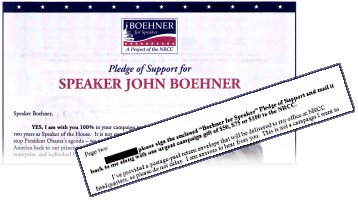
...why don’t you get someone to look up Reichsfluchsteuer for you?
And then fuck you[1] and the horse you rode in on.
Elsewhere:
Zero Hedge: "The land of the free has certainly fallen a long way.â€
Perry de Havilland: I may have said this before...
LATER:
You thought Jonah Goldberg was kidding about Liberal Fascism, didn’t you?(Hey, it ain’t only liberals.)
RELATED (120523 22:00):
...if we had any House leadership at all, Kathleen Sebelius would be called in front of Congress and the responsible HHS managers charged with illegal campaign contributions to Obama’s reelection effort.
But John Boehner is an intellectual and leadership lightweight...
(Reason and Zero Hedge via.Insty.)
-----
STEPHANOPOULOS: ...we saw a couple of senators, Senator Schumer and Senator Casey, yesterday introduce legislation about one of the Facebook founders, Eduardo Saverin, who's renounced his citizenship. They say -- and they want to pass legislation that says anyone who renounces their citizenship should still pay all the taxes they owe and, if they don't, they can’t come back here. Do you support that legislation?Tells you all you need to know, dunnit...?
BOEHNER: Well, there’s already a law on the books, George, but this is outrageous. This is absolutely outrageous.
STEPHANOPOULOS: What’s outrageous?
BOEHNER: That some -- that somebody would renounce their citizenship to avoid paying taxes. Again, it’s already against the law.
STEPHANOPOULOS: So you don't think you need this new legislation?
BOEHNER: No, I'm not sure it’s necessary. But...
(CROSSTALK)
STEPHANOPOULOS: Would you support it if it is?
BOEHNER: If it's necessary, sure, I would support it.
Posted by: Old Grouch in
Rants
at
16:22:25 GMT
| No Comments
| Add Comment
Post contains 288 words, total size 7 kb.
51 queries taking 0.1956 seconds, 187 records returned.
Powered by Minx 1.1.6c-pink.